

Healthy eating is more than trimming your waist or improving appearance—it’s about fueling your body and mind the right way. It is about feeling energized, improving your mental clarity, and preventing chronic diseases. By developing simple, consistent habits, you can transform your health and overall quality of life. Here, we share 30 healthy eating habits that can make a real difference.
Why Healthy Eating Matters
Healthy eating fuels your body with the right nutrients. Balanced meals provide energy for daily activities, strengthen your immune system, and support mental health. Eating well is also linked to better sleep, lower stress, and reduced risk of heart disease, diabetes, and obesity.
Even small changes, like swapping sugary drinks for water or adding more vegetables to your plate, can create long-term benefits. The key is consistency. Adopting healthy habits gradually is more effective than sudden drastic changes.
30 Healthy Eating Habits to Follow
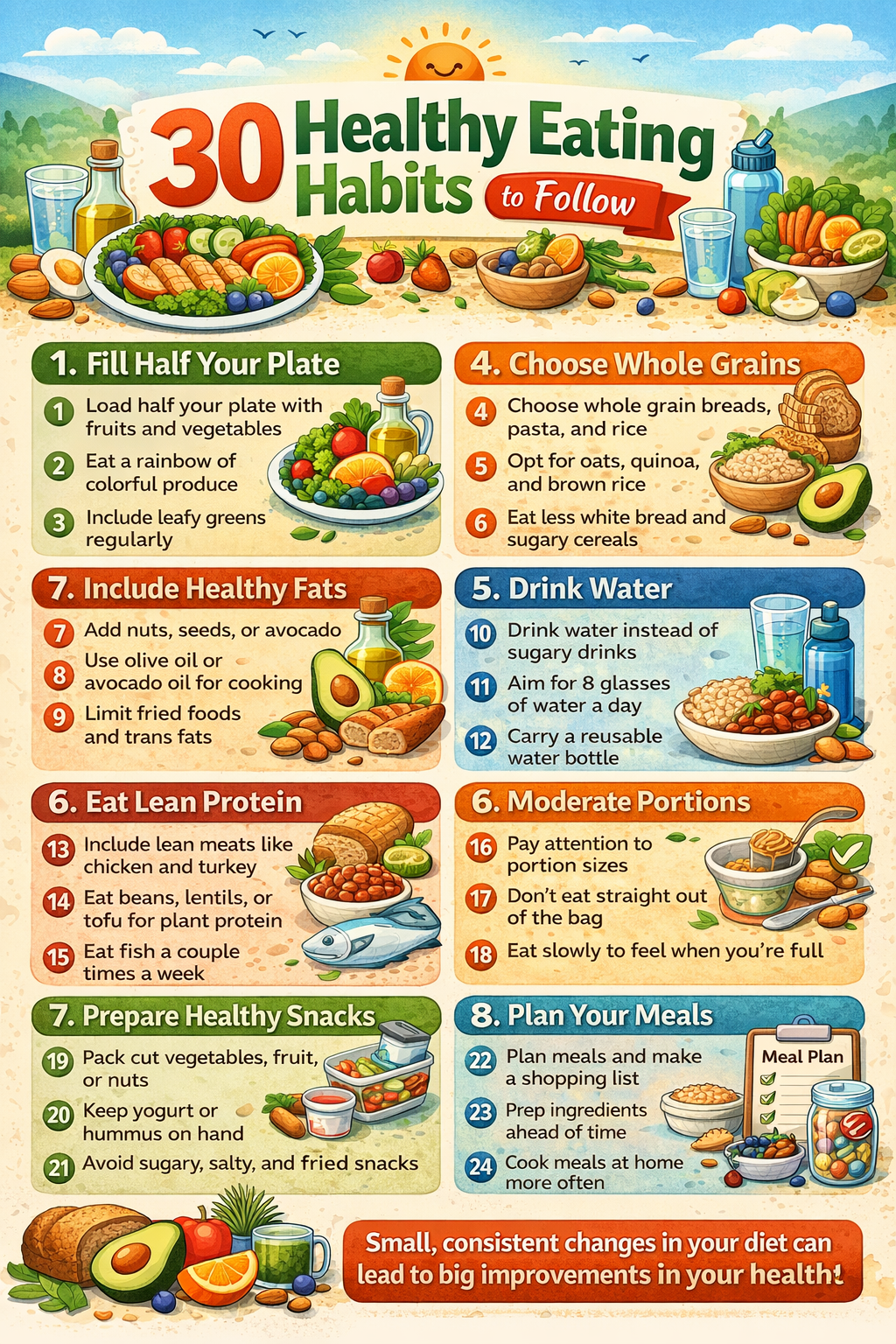
We’ve divided these habits into categories to make them easy to understand and follow.
Habits for Balanced Meals
-
Include more fruits and vegetables every day
-
Eat whole grains instead of refined grains
Swap white rice or bread with brown rice, quinoa, or whole wheat bread. Whole grains are rich in fiber and keep you full longer. -
Incorporate lean proteins in every meal
Chicken, fish, beans, and tofu are excellent choices. They support muscle growth and repair. -
Include good fats in your meals by using foods like nuts, seeds, and a little olive oil.
Healthy fats improve heart health and brain function. Sprinkle flaxseeds in your smoothie or drizzle olive oil over salads. -
Control portion sizes naturally
Use smaller plates and bowls to prevent overeating. Listen to your body’s hunger cues instead of eating until stuffed.
Habits for Mindful Eating
-
Eat slowly and savor your food
Chew thoroughly and enjoy each bite. This helps digestion and prevents overeating. -
Avoid distractions while eating
Turn off your TV or put your phone aside. Focusing on food improves satisfaction and helps you notice fullness. -
Listen to your body’s hunger cues
Have your meals when your body is truly hungry, not simply on the clock. -
Stop eating when full, not when the plate is empty
Listen to your body—it knows when it’s fully fueled and satisfied. -
Plan meals instead of impulsive eating
Prepare a weekly meal plan. For example, pack your lunch to avoid unhealthy takeout.
Habits for Healthy Snacking
-
Choose fruits, nuts, or yogurt over processed snacks
Instead of chips or candy, snack on an apple with almond butter or Greek yogurt with berries. -
Keep healthy snacks handy
Keep ready-to-eat snack boxes filled with chopped veggies or a handful of nuts for a quick and healthy bite. -
Limit sugary treats to special occasions
Enjoy desserts occasionally rather than daily to reduce excess sugar intake. -
Hydrate before snacking
Drink water before reaching for a snack. Sometimes thirst is mistaken for hunger. -
Prepare homemade snacks
Homemade granola bars or baked chickpeas allow control over ingredients and reduce additives.
Habits for Better Digestion
-
Drink enough water daily
Aim for 6-8 glasses per day to keep digestion smooth and prevent dehydration. -
Include fiber-rich foods in every meal
Including vegetables, fruits, beans, and whole grains in your meals supports easy digestion and keeps your gut in good shape. -
Avoid overeating late at night
Late-night heavy meals can cause indigestion. Opt for light dinners instead. -
Chew food thoroughly
Chewing well helps break down food, making digestion easier. -
Limit carbonated and processed drinks
Sodas and energy drinks can upset your stomach and add unnecessary sugar.
Habits for Long-Term Health
-
Cook more meals at home
Home-cooked meals allow you to control salt, sugar, and oil. -
Limit highly processed foods
Many fast foods and packaged snacks are loaded with poor-quality fats and artificial ingredients. -
Reduce added sugar gradually
Replace sugary drinks with water or herbal tea to slowly cut down sugar intake. -
Eat seasonal and local produce
Seasonal fruits and vegetables are fresher, tastier, and more nutritious. -
Experiment with plant-based meals
Try meatless meals a few times a week for heart health and variety.
Habits for Lifestyle Support
-
Keep a food journal
Track what you eat to identify habits and areas for improvement. -
Set realistic nutrition goals
Instead of aiming for perfection, focus on achievable goals like adding one extra vegetable per day. -
Don’t skip breakfast
A healthy breakfast kick-starts metabolism and improves focus throughout the day. -
Learn to read nutrition labels
Check sugar, sodium, and fat content to make informed choices. -
Celebrate progress, not perfection
Reward yourself for small victories, like choosing a healthy snack or preparing a homemade meal.
Tips to Make Healthy Eating a Habit
-
Start small: Change one or two habits at a time rather than overhauling everything.
-
Prepare meals ahead: Meal prep ensures you have healthy options ready, reducing temptation.
-
Surround yourself with support: Encourage friends and family to join you in eating healthy.
-
Be consistent, not perfect: Skipping a healthy meal occasionally is okay. Focus on long-term consistency.
FAQs About Healthy Eating
Start with adding more fruits and vegetables, drinking enough water, and avoiding sugary drinks. Small changes are easier to maintain.
Can small changes really make a difference?
Yes. Consistent small habits, like swapping white bread for whole grains or eating home-cooked meals, accumulate and improve overall health.
How do I stay motivated to eat healthy?
Track your progress, meal prep in advance, set realistic goals, and celebrate small wins.
Are healthy eating habits the same for everyone?
Basic principles like balanced meals, hydration, and limiting processed foods apply to most people, but individual needs may vary based on age, health, and lifestyle.
Conclusion
Adopting these 30 healthy eating habits doesn’t have to be overwhelming. Start small, stay consistent, and gradually incorporate more habits into your daily routine. Remember, healthy eating is not about perfection—it’s about making choices that support your body, mind, and long-term well-being.
By following these habits, you can boost energy, improve mental clarity, prevent diseases, and enjoy a better quality of life. Begin today and take one step closer to a healthier, happier you!