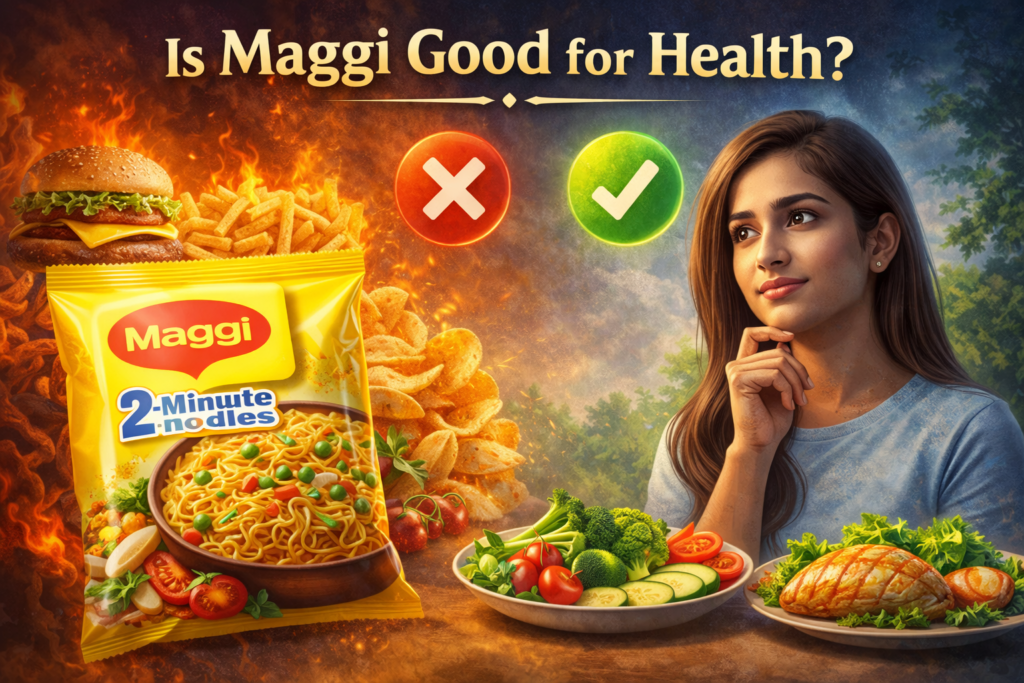

Maggi is more than just instant noodles in India. It is childhood comfort, late-night hunger support, and a quick fix for busy days. However, a common question keeps coming up: is Maggi good for health? Some people enjoy it guilt-free, while others avoid it completely. The truth lies somewhere in between.
Maggi is neither a health food nor pure junk when eaten responsibly. Its impact on health depends on frequency, portion size, and how it is prepared. Let’s break this down in a simple and honest way.
Table of Contents
ToggleUnderstanding What Maggi Is Made Of
Key Ingredients in Maggi Noodles
Maggi noodles are mainly made from refined wheat flour (maida), vegetable oil, salt, and seasonings. The tastemaker contains spices, flavor enhancers, and preservatives to improve shelf life and taste. These ingredients explain why Maggi cooks quickly and tastes so good.
However, refined flour lacks fiber and essential nutrients. As a result, it digests fast and does not keep you full for long. Moreover, the tastemaker contains sodium, which can add up quickly.
Nutritional Value of Maggi
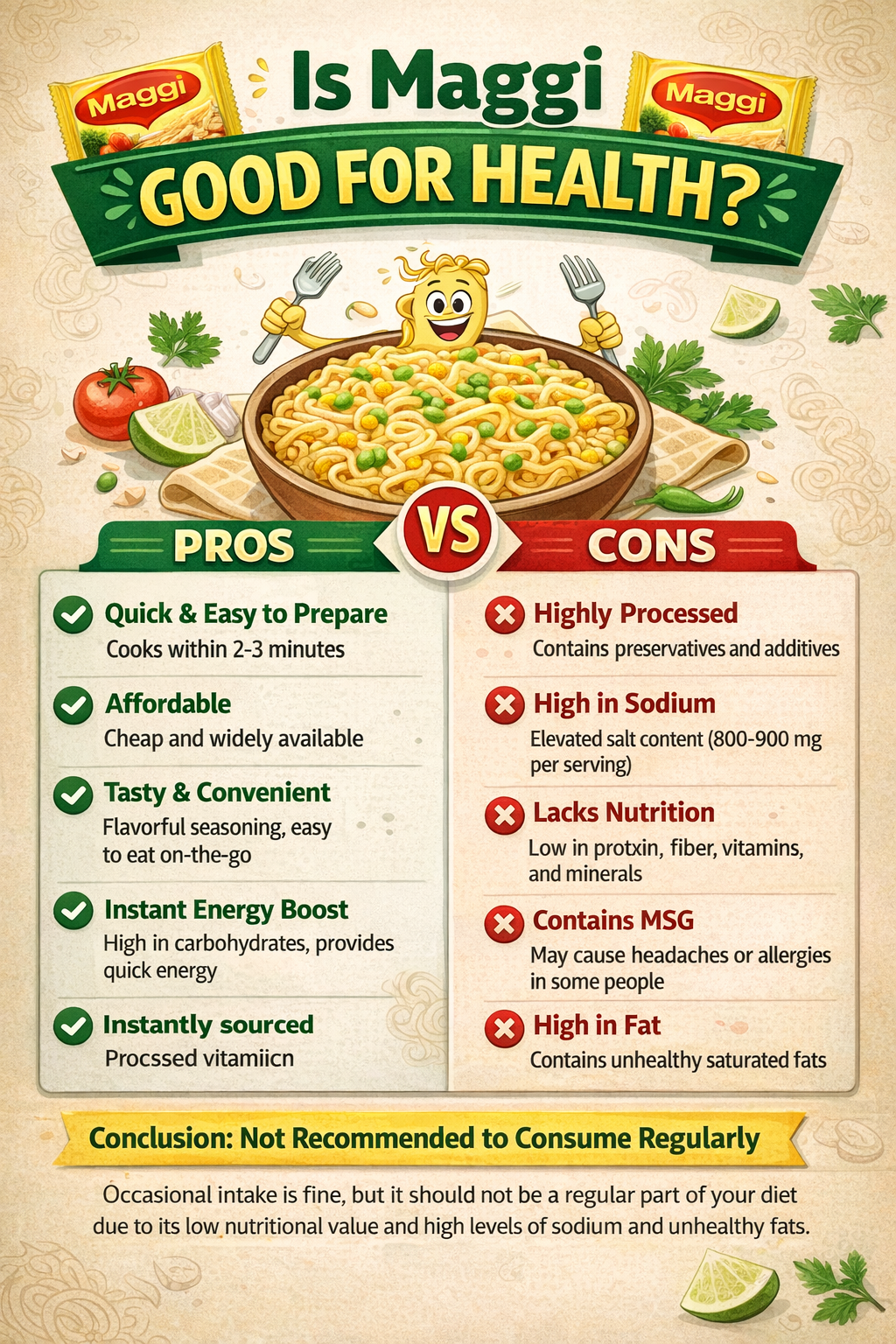
A single pack of Maggi provides carbohydrates, some fats, and a small amount of protein. It does offer energy, but it is low in fiber, vitamins, and minerals. In addition, the protein quality is not complete.
Maggi also contains sodium, which can be high if consumed often. Therefore, people with blood pressure issues should be more careful. While fortified versions exist, they still cannot replace a balanced meal.
Why Maggi Tastes So Good
Taste plays a big role in Maggi’s popularity. The mix of salt, spices, and umami flavors triggers cravings. For example, after a long day, a hot bowl feels comforting and satisfying.
However, this same taste factor can lead to overeating. As a result, moderation becomes important when deciding if Maggi is good for health.
Is Maggi Healthy or Unhealthy for Daily Consumption?
Effects of Eating Maggi Frequently
Eating Maggi occasionally is unlikely to cause harm. However, eating it daily may affect digestion and nutrition. Since it lacks fiber, regular consumption can lead to constipation or bloating in some people.
Moreover, high sodium intake over time may increase the risk of water retention and high blood pressure. Therefore, Maggi should not become a daily habit.
Maggi and Weight Gain Concerns
Many people ask whether Maggi causes weight gain. The answer depends on quantity and lifestyle. Maggi is calorie-dense but not filling. As a result, you may feel hungry again soon and snack more.
In addition, if Maggi replaces home-cooked meals regularly, it can lead to poor nutrient intake. Therefore, weight gain is possible when Maggi is eaten often without balance.
Is Maggi Junk Food?
Maggi is often labeled as junk food, but that label can be misleading. It is processed and low in nutrition, yet not harmful when eaten occasionally. Junk food becomes a problem when it replaces real food.
Therefore, Maggi should be treated as a convenience food, not a staple. Balance is the key to deciding if Maggi is good for health.
Health Risks Associated with Excessive Maggi Consumption
High Sodium Content and Its Impact
One of the biggest concerns is sodium. Excess sodium can affect blood pressure and heart health over time. For example, people with hypertension should limit such foods.
Moreover, children who consume high-salt foods may develop unhealthy eating habits early. Therefore, portion control is essential.
Refined Flour and Digestive Health
Maggi uses refined flour instead of whole grains. Refined flour lacks fiber, which supports digestion and gut health. As a result, frequent consumption may lead to digestive discomfort.
In addition, refined carbs can cause blood sugar spikes. This is especially important for people managing diabetes.
Additives and Preservatives
Maggi contains approved additives to maintain taste and shelf life. These are considered safe within limits. However, eating too many processed foods increases additive intake overall.
Therefore, relying heavily on instant noodles is not a healthy long-term choice.
Can Maggi Be Made Healthier?
Adding Vegetables and Protein
Maggi can become healthier with small changes. Adding vegetables like carrots, peas, spinach, or capsicum increases fiber and vitamins. Moreover, adding protein sources like eggs, paneer, tofu, or boiled chicken improves satiety.
For example, vegetable Maggi with eggs can turn into a more balanced meal.
Reducing Tastemaker Usage
Using half the tastemaker reduces sodium intake significantly. You can add your own spices like turmeric, black pepper, or garlic for flavor.
As a result, the dish becomes lighter and easier on the stomach.
Healthier Cooking Methods
Avoid adding extra oil or butter. Cooking Maggi with less water and draining excess seasoning can also help. In addition, pairing Maggi with a salad or fruit balances the meal.
Therefore, preparation style matters when asking if Maggi is good for health.
Who Should Avoid or Limit Maggi Consumption?
Children and Growing Teens
Children love Maggi, but it should not replace proper meals. Growing bodies need protein, calcium, and micronutrients. Maggi lacks these essentials.
Therefore, Maggi should be an occasional treat, not a lunchbox staple.
People with Health Conditions
People with high blood pressure, diabetes, or digestive issues should limit Maggi. The sodium and refined carbs may worsen symptoms.
Moreover, those trying to lose weight should be mindful of portions.
Busy Adults and Office-Goers
Maggi feels like a lifesaver during busy schedules. However, relying on it regularly may lead to fatigue and nutrient deficiencies. Therefore, quick homemade options like dal, oats, or eggs are better choices.
Frequently Asked Questions (FAQs)
Is Maggi good for health if eaten once a week?
Eating Maggi once a week is generally safe for healthy individuals. When consumed in moderation and paired with vegetables or protein, it does not cause harm. Problems arise only when Maggi replaces balanced meals regularly.
Does Maggi increase weight?
Maggi can contribute to weight gain if eaten frequently in large portions. It is calorie-dense and low in fiber, which may increase hunger. However, occasional consumption within a balanced diet usually does not affect weight.
Is Maggi safe for children?
Maggi is safe for children when eaten occasionally. However, it should not be a regular meal because it lacks essential nutrients needed for growth. Adding vegetables can slightly improve its nutritional value.
Is Maggi bad for digestion?
Maggi may cause digestive discomfort if eaten frequently due to refined flour and low fiber content. People with sensitive digestion may experience bloating or constipation. Adding vegetables can help improve digestion.
Can Maggi be part of a healthy diet?
Maggi can be part of a healthy diet when eaten rarely and prepared mindfully. It should not replace home-cooked meals. Balance, portion control, and smart additions make a big difference.
Is vegetable Maggi healthier than plain Maggi?
Vegetable Maggi is healthier than plain Maggi because it adds fiber, vitamins, and minerals. While it still remains a processed food, vegetables improve its overall nutritional profile.
Is Maggi good for health during pregnancy?
Pregnant women should limit Maggi consumption due to sodium and low nutrition. Occasional intake is fine, but it should not be a regular meal. Fresh, nutrient-rich foods are always better during pregnancy.
Final Thoughts
So, is Maggi good for health? The honest answer is no, if eaten daily and without balance. However, it is not harmful when enjoyed occasionally and prepared wisely. Maggi works best as a comfort food, not a nutrition source.
If you love Maggi, enjoy it without guilt, but don’t let it replace real meals. Add vegetables, reduce seasoning, and keep portions reasonable. Small choices make a big difference in long-term health.