
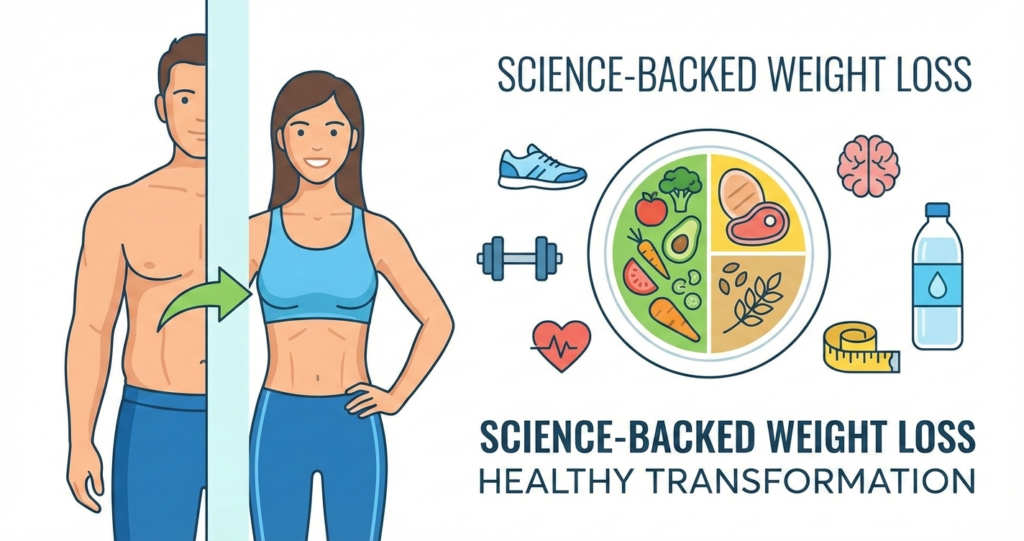

Introduction: Why Weight Loss Feels So Hard
If losing weight was only about eating less and exercising more, most people wouldn’t struggle at all.
But real life is not that simple.
Busy work schedules, constant stress, confusing online advice, food cravings, and loss of motivation make weight loss feel overwhelming and frustrating for many people.
You might relate to this:
-
You tried strict diets but gained the weight back
-
You worked out regularly but saw very slow results
-
You felt tired, hungry, irritated, or mentally exhausted
This happens not because you lack discipline, but because most weight loss advice ignores real life.
The truth is simple:
👉 Weight loss works when science meets sustainability.
In this detailed guide, you’ll learn 50 weight loss tips that actually work, supported by latest research (2024–2025), real-life examples, expert-backed principles, and easy action steps—all explained in simple, practical English.
This is not a crash diet.
This is a real-life weight loss playbook you can actually follow.
Understanding Weight Loss: The Science in Simple Words
At its core, weight reduction happens when:
Calories burned are greater than calories consumed
However, the body is not a calculator.
Factors like hormones, sleep quality, stress levels, gut health, protein intake, and mindset decide how easy—or difficult—this process feels.
Key Science Concepts You Should Know
-
Calories matter, but food quality matters more
-
Protein helps preserve muscle and increases metabolism
-
Consistency beats intensity every time
-
Long-term habits are more powerful than short-term motivation
When these basics are aligned, weight loss becomes easier and more predictable.
50 Weight Loss Tips That Actually Work
A. Nutrition-Based Tips (1–20)

1. Eat More Protein Every Day
Protein helps control hunger, reduces cravings, and slightly increases calorie burning.
Best protein sources:
-
Eggs, paneer, curd
-
Dal, chickpeas, rajma
-
Chicken, fish
-
Soy, tofu
Research consistently shows that high-protein diets help people lose fat while protecting muscle mass.
2. Start Your Day with a Protein-Rich Breakfast
Skipping protein in the morning often leads to cravings later.
Simple comparison:
Eggs + vegetables ✅
Bread + jam ❌
3. Control Portions Without Starving
You don’t need to eat less—just eat smarter.
Try:
-
Smaller plates
-
Half your plate filled with vegetables
-
Eating slowly and stopping before feeling stuffed
4. Drink Water Before Meals
Drinking 1–2 glasses of water before meals can naturally reduce calorie intake by 10–15%.
5. Avoid Liquid Calories
Liquid calories don’t fill you up.
Limit:
-
Soft drinks
-
Sugary juices
-
Fancy coffee drinks
6. Eat More Fiber-Rich Foods
Fiber slows digestion and keeps you full longer.
Good sources:
Vegetables, fruits, oats, seeds, and whole grains.
7. Reduce Added Sugar (Not Fruits)
Added sugar spikes insulin and increases fat storage.
Natural sugars from fruits are fine when eaten in moderation.
8. Don’t Fear Healthy Fats
Healthy fats help control appetite and support hormone health.
Good fats include:
Nuts, seeds, olive oil, and limited ghee.
9. Practice Mindful Eating
Eat without distractions.
No phone. No TV. Just food.
10. Plan Your Meals in Advance
Meal planning reduces impulsive junk food choices, especially on busy days.
11. Cook More Meals at Home
Home-cooked food gives better control over ingredients, oil, and portions.
12. Avoid Late-Night Snacking
Late-night eating often leads to excess calories and poor digestion.
13. Follow the 80/20 Rule
-
80% nutritious foods
-
20% flexible foods
This makes weight loss sustainable.
14. Don’t Skip Meals
Skipping meals increases hunger and often leads to overeating later.
15. Choose Whole Foods Over Processed Foods
Foods with fewer ingredients are usually better for fat loss.
16. Reduce Refined Carbohydrates
Minimize processed carbs like white bread, bakery treats, instant noodles, and packaged foods.
17. Support Gut Health with Probiotics
A healthy gut improves digestion and fat metabolism.
18. Eat Slowly
Your brain doesn’t instantly sense fullness—it takes nearly 20 minutes.
19. Control Salt Intake
Too much salt causes water retention and bloating.
20. Track Food Occasionally
Tracking for a few days improves awareness and portion control.
B. Exercise & Activity Tips (21–35)
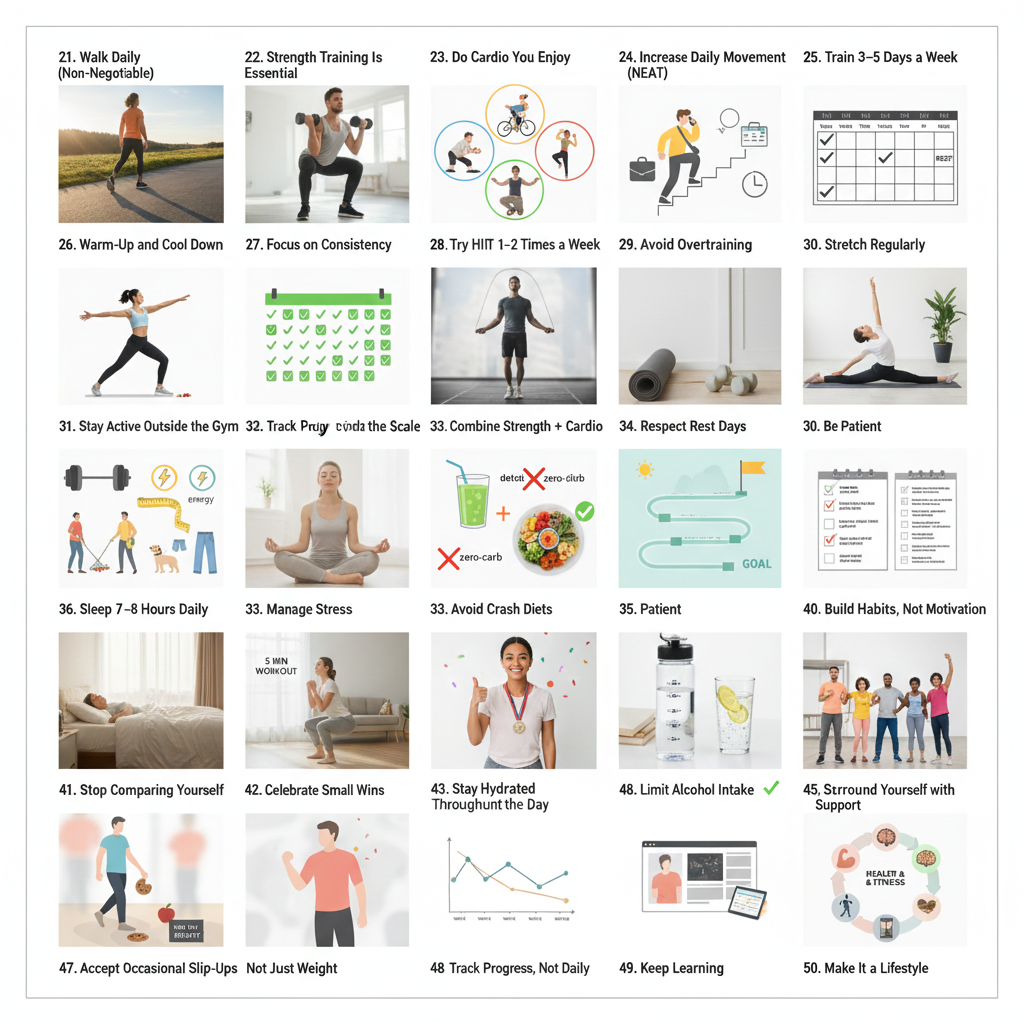
21. Walk Daily (Non-Negotiable)
Walking 8,000–10,000 steps daily significantly supports fat loss.
22. Strength Training Is Essential
Building muscle increases calorie burning even at rest.
23. Do Cardio You Enjoy
Walking, cycling, swimming, or dancing—all are effective if done consistently.
24. Increase Daily Movement (NEAT)
-
Take stairs
-
Stand more
-
Walk during calls
25. Train 3–5 Days a Week
More exercise is not always better. Recovery matters.
26. Warm-Up and Cool Down
This reduces injury risk and improves recovery.
27. Focus on Consistency
Missing one workout doesn’t matter. Quitting does.
28. Try HIIT 1–2 Times a Week
Short, intense workouts burn calories efficiently.
29. Avoid Overtraining
Too much exercise increases stress hormones and slows progress.
30. Stretch Regularly
Stretching improves mobility and muscle recovery.
31. Stay Active Outside the Gym
Daily life activities count more than you think.
32. Track Progress Beyond the Scale
Look at:
-
Body measurements
-
Energy levels
-
How clothes fit
33. Combine Strength + Cardio
This combination works best for fat loss.
34. Respect Rest Days
Muscles grow and recover during rest.
35. Start Small
Even 10 minutes daily is enough to begin.
C. Lifestyle & Mindset Tips (36–50)
36. Sleep 7–8 Hours Daily
Poor sleep increases hunger hormones and cravings.
37. Manage Stress
Chronic stress promotes belly fat storage.
38. Avoid Crash Diets
They damage metabolism and lead to rebound weight gain.
39. Be Patient
Healthy weight loss is 0.5–1 kg per week.
40. Build Habits, Not Motivation
Habits keep you consistent even on bad days.
41. Stop Comparing Yourself
Your journey is unique.
42. Celebrate Small Wins
Small progress builds confidence.
43. Stay Hydrated Throughout the Day
Water supports digestion and fat metabolism.
44. Limit Alcohol Intake
Alcohol slows fat burning and increases appetite.
45. Surround Yourself with Support
Your environment affects your choices.
46. Accept Occasional Slip-Ups
One bad meal doesn’t ruin progress.
47. Focus on Health, Not Just Weight
Better energy, strength, and mood matter too.
48. Track Progress Weekly, Not Daily
Daily weight fluctuates due to water and digestion.
49. Keep Learning
Knowledge helps you make better decisions.
50. Make It a Lifestyle
Temporary diets give temporary results.
Conclusion: Your Weight Loss Journey Starts Now
Weight loss is not about suffering or extreme rules.
It’s about small, smart choices repeated consistently.
If you apply even 10–15 tips from this guide, you will notice improvements in:
-
Your body
-
Your energy
-
Your confidence
-
Your overall health
💡 Remember:
“Small steps taken every day lead to big results over time.”
👉 Explore More Powerful Guides
For more content on motivation, productivity, career growth, technology, digital marketing, and earning opportunities, visit
👉 https://digitalsampurngyan.com/
Your transformation starts with one simple decision today 💪

